Google DeepMind says a researcher using its Antigravity AI workbench identified a possible antimicrobial peptide and that the candidate is now being tested in a lab. In the company's October 15 walkthrough, the researcher sets a goal of finding antimicrobial peptides in Streptococcus pseudopneumoniae; Antigravity's agent searches UniProt and narrows millions of protein records to a 97-amino-acid bacteriocin, a protein that can inhibit other bacteria. The candidate's antimicrobial activity remains a hypothesis; Google has not reported lab results.
DeepMind says its ProtNLM model predicts biological functions from amino-acid sequences and helps screen uncharacterized UniProt records. The researcher then directs the agent to compare the candidate with reviewed proteins in Swiss-Prot; the company reports no meaningful sequence match. An AlphaFold-predicted structure resembles an experimentally determined bacteriocin, while nearby genes place the candidate six DNA bases ahead of an ABC transporter gene and near another bacteriocin gene. DeepMind says these clues support the candidate's likely role in a bacteriocin system. They are computational evidence for choosing what to test, not proof that the peptide works.
UniProt identifies candidate A0A0U0D591 as a Lactococcin 972-family bacteriocin from Streptococcus pseudopneumoniae and marks the record as unreviewed. DeepMind says a literature review suggested that the peptide might interfere with bacterial cell division and could act against several drug-resistant pathogens. Those are predictions for this candidate, not measured results.
DeepMind says this candidate and several others are now undergoing laboratory tests, including checks of protein production, bacterial susceptibility, target engagement and toxicity in cell experiments. The company says Antigravity condenses days of separate database triage into one session, but gives no controlled time comparison or rate of successful leads. The walkthrough reports no experimental results, so it does not establish that the candidate is effective or safe.
Sources
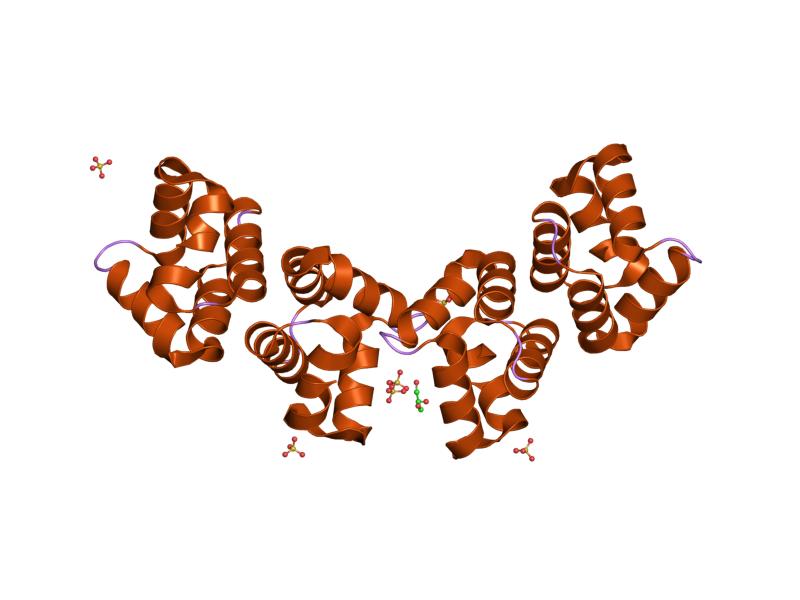
Illustrative image: Bacteriocin AS-48 structure, Jawahar Swaminathan and MSD staff at EMBL-EBI/PDBe, public domain, via Wikimedia Commons. The pictured peptide (PDB 1O82) is unrelated to Google's candidate; see RCSB PDB 1O82.
