On October 13, 2026, Arm published a proposed framework for measuring the work CPUs do around AI agents, including running tools, retrieving data and coordinating repeated steps. The white paper maps five kinds of agent workloads and pairs repeatable tests of individual software components with measurements of complete tasks. It does not define a finished benchmark suite or a single overall score.
The CPU work around the model
An AI agent often does more than send one prompt to a model. It may retrieve information, maintain task state, call software tools, run code and check the result. A graphics processor or other accelerator can handle model inference, while a CPU coordinates much of the surrounding work. Benchmarks focused only on model execution or isolated processor tasks leave parts of that path out.
Arm’s proposal groups agent workloads into five representative types: software engineering, enterprise operations, financial and scientific research, personal assistants, and robotics. Their tools and constraints differ. A coding agent may compile and test software; an enterprise agent may query databases and call APIs; a robot may coordinate simulation, sensors and control. Those differences shape what the CPU has to do.
The framework calls for two complementary measurements. Component tests can repeat operations such as compiling code, handling requests, searching data or starting isolated environments, helping researchers attribute performance to the CPU. End-to-end tests follow a complete task through the model, agent software, tools and data systems, showing whether faster components improve a finished task. But those results can also shift with model behavior, network delays and deployment choices.
To make end-to-end tests more repeatable, the paper proposes recording and replaying the sequence of tool calls an agent makes. Replaying the same trajectory can hold CPU-side work more constant while reducing variation from a model choosing a different route. The paper says one trajectory may not represent a workload; how to select a representative set remains an open question.
Signal65 models performance per rack
In a report published October 12, 2026, Signal65 compared Arm’s AGI CPU with AMD’s two-socket EPYC 9755 across seven CPU workloads. Signal65 says the research was commissioned by Arm. It reported an average of 1.99 times the modeled performance per rack for the Arm system, with individual workload results ranging from 1.43 to 3.19 times.
That rack figure combines measured per-chip performance with a model using rated server power. Signal65 estimated that a 24-kilowatt rack could hold 21 to 23 Arm AGI CPU servers, compared with 13 EPYC 9755 servers. The result is therefore a modeled rack estimate for seven selected workloads, not a measurement from running two complete racks or a score for every AI-agent application.
Separately, Arm’s white paper is a proposed measurement method, not a benchmark standard the industry has already adopted. Signal65 describes its systems as early AGI CPU hardware and says it plans broader follow-up testing on final production systems. Arm says Fujitsu, Meta and OpenAI support the methodology; the white paper says common workloads and replay methods still need industry agreement.
Sources
- Arm Newsroom: proposed CPU measurement methodology and AGI CPU results
- Arm white paper: workload framework, measurement boundaries and open questions
- Signal65: seven-workload comparison and rack model
- Illustrative image source: Derrick Coetzee, “Front of server racks at NERSC” (2011), CC0 1.0

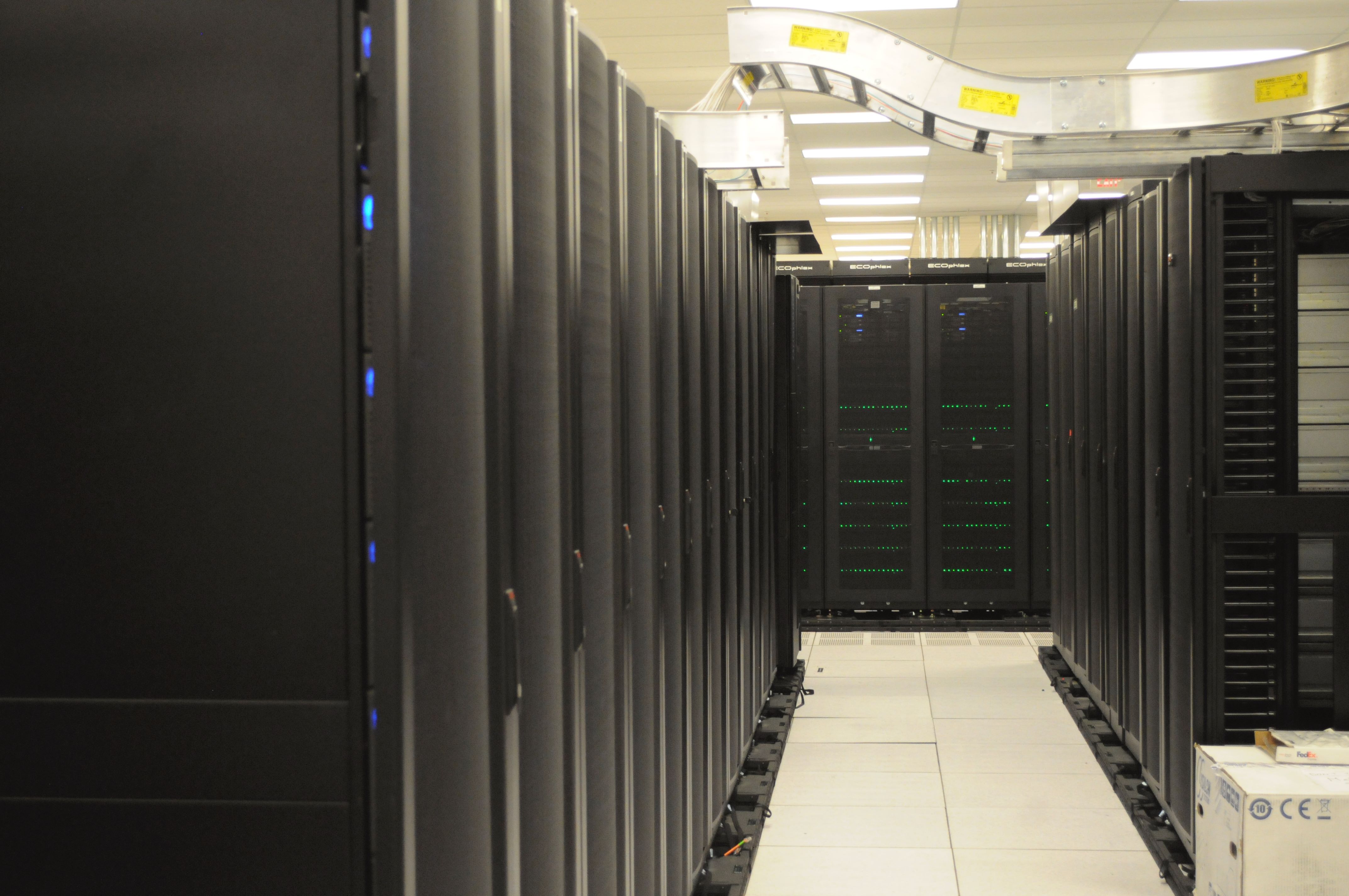
Image: Derrick Coetzee, “Front of server racks at NERSC” (2011), Wikimedia Commons, CC0 1.0. The image is illustrative and does not show Arm AGI CPU hardware.