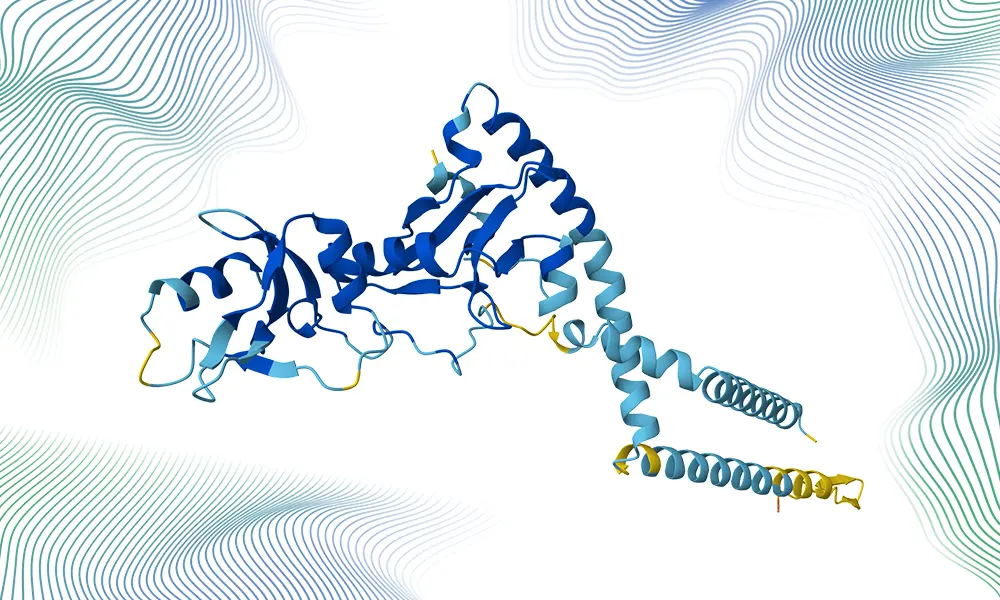
The AlphaFold Database has added predicted protein complexes from 2,812 viral proteomes, giving researchers a searchable starting point for examining how viral proteins may interact. The portal focuses on 23 families with members known to infect humans.
A protein complex is a group of proteins that associate. The new release lists 5,279 high-confidence heterodimers, which pair different proteins, and 2,749 high-confidence homodimers, which pair copies of the same protein. The database separately includes 4,681 homodimers from the existing Viral AlphaFold Database; those are not part of this new collaboration’s counts.
AlphaFold2 and AlphaFold-Multimer generated the new structures. A predicted pair can suggest where proteins may meet, but model confidence does not experimentally verify the interaction. NVIDIA, a project partner, says about 30% of the added interactions had not been documented in the Protein Data Bank. That means they are new to structural records, not that their biological interactions have been verified.
The predicted structures are available through the AlphaFold Database’s Pandemic Preparedness portal under a CC BY 4.0 data licence. Researchers can browse and download predictions, then use them to choose interactions for closer study.
EMBL-EBI cautions that predicted structures alone cannot show how a virus will behave, how mutations affect it, or whether a proposed interaction occurs in infected cells. The release supplies searchable hypotheses; laboratory work must establish which ones hold up.
Sources
- AlphaFold Database: Pandemic Preparedness portal, dataset counts and licence
- EMBL: release scope, intended use, limitations and image credit
- NVIDIA: prediction workflow and Protein Data Bank comparison
Lead image: AlphaFold Database rendering of entry AF-0000000213001003; data available under CC BY 4.0. Background by Karen Arnott/EMBL-EBI. The image is illustrative of a predicted structure, not an experimental result.