A live AI avatar can produce conflicting output during a server handoff if both the old and new servers receive fresh instructions. Researchers from AiShiWeiLai and Sichuan University describe DHSched, a system that checks ownership before each input reaches the server running an avatar. Their production service reached 49,987 simultaneous sessions, according to a paper released on 22 September.
Each session turns incoming text into speech, facial movement and video. Moving it between GPU servers can relieve load or recover from a failure, but the previous server may still have an active video connection after the new assignment has been recorded. If both receive new text, they can produce conflicting output for the same avatar.
DHSched gives each assignment a server ID and a rising version number. The controllers rely on an authoritative shared store for session ownership, so each does not need a separate record. The new server must claim its assignment, and the component carrying incoming text checks the ID and version again before releasing every new item. The old server can remain connected briefly, but it loses permission to receive fresh input. When a server fails, the replacement rebuilds the session from shared metadata and pending text rather than waiting for the failed machine to send its working state.
The authors report 9,927 session moves on 10 June, a day the service reached its 49,987-session peak, with no observed cases of two servers authorized for the same session or servers assigned beyond capacity. In a separate test of 100,000 randomized ownership sequences per protocol, checks based only on server identity allowed conflicting ownership in 14.0% of runs; the full ID-and-version check recorded none. The randomized result tests the protocol under modeled races, while the production figure is an operator observation, not a direct comparison of alternative systems in live traffic.
The approach depends on an authoritative shared store and on every input that changes a session passing through the checking component. It also assumes that enough session state is kept outside the serving GPU for a replacement to reconstruct the avatar. The paper does not establish the same recovery path for services whose only usable state remains on the failed server.
Sources
- DHSched paper, submitted 22 September 2026
- Full paper, including production observations, protocol tests and assumptions
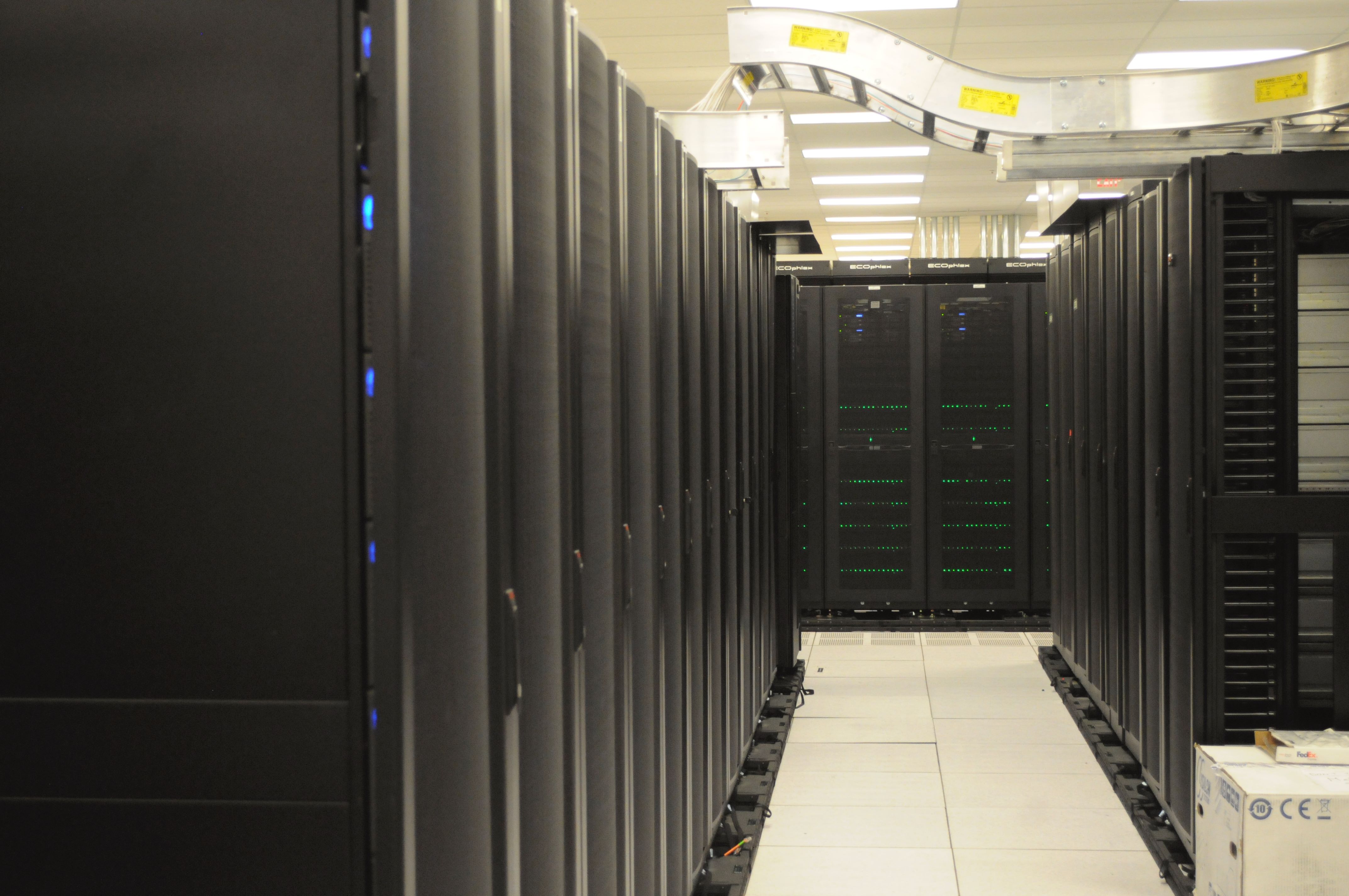
- Illustrative photograph of server racks at NERSC, not the avatar service's hardware: Derrick Coetzee via Wikimedia Commons, CC0 1.0.
